
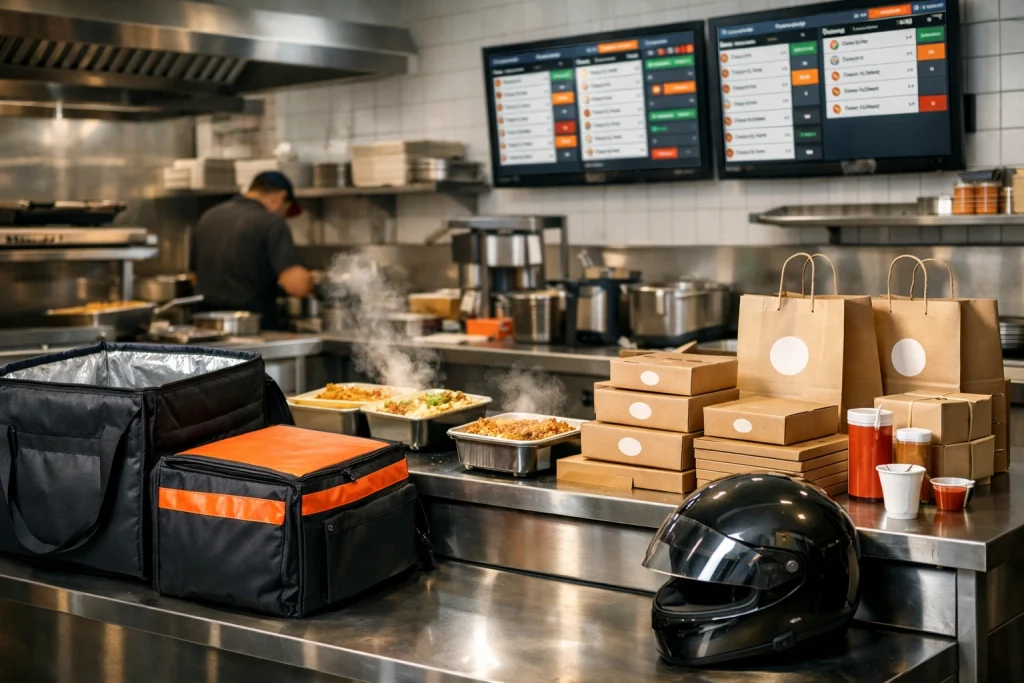
In recent years, the food business has been changing rapidly. Customer habits are evolving. Online food delivery is growing. People increasingly prefer ordering food from the comfort of home.
At the same time, many aspiring entrepreneurs—especially women—still face one major challenge:
How can they start a business with limited investment and lower risk?
This is where the concept of Cloud Kitchen can become a meaningful opportunity.
What Is a Cloud Kitchen?
A cloud kitchen (also known as a virtual kitchen or delivery-only kitchen) is a food production business that operates without a traditional dine-in restaurant setup.
Instead of investing heavily in expensive interior design, large dining spaces, waiters, and prime commercial locations, food is prepared in a kitchen and delivered directly to customers through online platforms, social media, or direct ordering systems.
In simple words:
Less investment. Lower operational cost. Reduced risk.
Why Cloud Kitchens Can Be a Strong Opportunity for Women
Bangladesh has many talented women with exceptional cooking skills, food knowledge, and entrepreneurial potential.
However, many face barriers such as:
• High startup investment
• Family responsibilities
• Limited mobility
• Fear of business risk
• Lack of professional guidance
Cloud kitchens can help address many of these challenges.
For many women, especially homemakers, a small food business can potentially begin from home using existing kitchen facilities and gradually grow into a structured brand.
This may allow women to:
• Generate independent income
• Work with flexible schedules
• Utilize existing culinary skills
• Build confidence as entrepreneurs
• Contribute financially to their families
In some cases, family members can also become involved—turning a home-based effort into a family-supported business.
But Cooking Alone Is Not Enough
One important reality must be understood:
A successful food business is not built only on good cooking.
It also requires:
• Food safety practices
• Hygiene and quality control
• Proper costing and pricing
• Menu planning
• Packaging standards
• Consistency in taste and service
• Basic marketing and digital presence
Without proper systems, even talented food entrepreneurs may struggle.
This is where training, mentorship, and operational guidance become important.
How Society Can Support Women Entrepreneurs
If we genuinely want to empower women through entrepreneurship, society must also play a role.
Families can support women by encouraging their ideas rather than discouraging risk.
Communities can support by trusting and purchasing from quality home-based food businesses.
Customers can support by valuing hygiene, consistency, and honest effort.
Most importantly—
Women entrepreneurs should be respected as business contributors, not seen merely as “trying something small.”
Sometimes, a small kitchen can become a large brand.
Every successful business starts somewhere.
How Suppliers and Stakeholders Can Help
Food suppliers, packaging providers, delivery partners, banks, and business communities can play an important role.
Support can include:
• Small-scale supply options
• Flexible purchase quantities
• Affordable packaging solutions
• Training programs
• Delivery partnerships
• Mentorship and business advisory
A supportive ecosystem can significantly improve survival and growth for small food entrepreneurs.
Legalization and Government Support Matter
As cloud kitchens grow, legalization and food compliance should also be encouraged.
Proper business registration, food safety awareness, licensing, and hygiene standards help create customer trust and long-term sustainability.
Government agencies, SME programs, women entrepreneurship initiatives, and financial institutions may also help by providing:
• Training opportunities
• Small business loans
• Entrepreneurship programs
• Food safety awareness
• Digital business support
A Vision for the Future
In my professional experience working with food service operations, hospitality, kitchen systems, and central food production, I believe cloud kitchens can create meaningful business opportunities in Bangladesh—especially for women.
But success requires more than passion.
It requires:
Training. Systems. Food safety. Consistency. Digital access. And community support.
If properly developed, cloud kitchens may not only create businesses—
They may help create a new generation of women entrepreneurs, improve household income, strengthen food entrepreneurship, and contribute positively to the economy.
Because sometimes—
A business does not begin with a large investment.
Sometimes, it begins with a kitchen, a skill, and the courage to start.